ADU Builders California is helping homeowners across the state understand the legal differences between tiny homes and permitted accessory dwelling units. Tiny homes have gained popularity as compact alternative housing, and many homeowners initially consider them as options for backyard living space. However, tiny homes and ADUs operate under different legal frameworks, qualify for different uses, and offer different long term value. The company clarifies these differences so homeowners can make informed decisions before committing to a path.
The choice between a tiny home and a permitted ADU often comes down to long term goals. Homeowners who want permanent legal living space that adds to property value, supports family members, generates rental income, and integrates fully with their property generally find that permitted ADUs deliver stronger outcomes. Homeowners with specific use cases that match tiny home characteristics may find that approach appropriate, but they should understand the trade offs clearly.
What California Defines as an Accessory Dwelling Unit
California law defines accessory dwelling units as residential structures attached to or detached from a primary residence that provide complete independent living facilities including living, sleeping, eating, cooking, and sanitation. ADUs are permanent structures built on permanent foundations, processed under California building codes, and inspected through standard residential building department procedures. They receive certificates of occupancy that document their status as legal dwelling units.
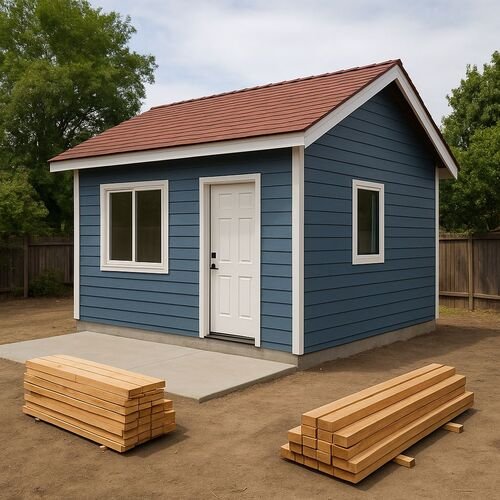
ADUs can be detached new construction, attached additions, junior ADUs within existing residences, or garage conversions. They can range in size from compact studios to substantial two bedroom units depending on lot conditions and local rules. They are connected to permanent utilities, supplied with proper sewer or septic service, and built to meet residential code requirements for safety, energy performance, and habitability.
What California Considers a Tiny Home
The term tiny home covers several different legal categories in California, each with different rules. Tiny homes on wheels, sometimes called THOWs, are typically regulated as recreational vehicles or park trailers. They are not legally classified as residences in most California zoning contexts. Tiny homes on permanent foundations may qualify as ADUs if they meet residential code requirements, but in that case they are simply small ADUs and follow ADU rules.
Tiny homes that fall outside the ADU framework face significant restrictions in California. Most jurisdictions do not allow recreational vehicles to be occupied as permanent residences on private property. Some jurisdictions have created specific tiny home programs with their own rules, often limited to specific lots, zones, or hardship situations. Statewide consistency is limited.
Legal Use as Permanent Housing
Permitted ADUs are unambiguously legal as permanent housing. Family members can occupy them indefinitely. Tenants can rent them under standard residential lease arrangements. Insurance covers them as dwellings. Mortgages can be obtained for them. They appear on property records as legal living space.
Tiny homes on wheels generally cannot be occupied as permanent housing on private property in California except under specific limited circumstances. Some jurisdictions allow temporary occupancy during specific circumstances such as caregiver situations, but these are narrow exceptions rather than general permission. Treating a tiny home on wheels as permanent housing without specific authorization creates legal risk for the homeowner.
Construction Code and Safety Requirements
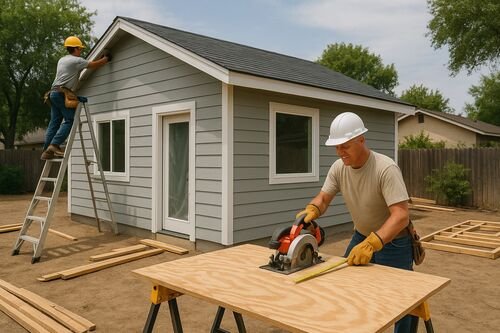
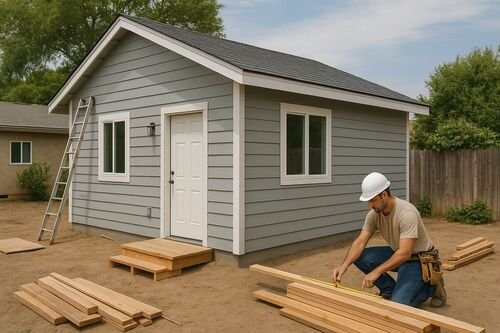
ADUs are built under the California Residential Code, the California Building Code, the California Plumbing Code, the California Mechanical Code, the California Electrical Code, and the California Energy Code. These codes establish minimum standards for structural integrity, fire safety, energy performance, ventilation, plumbing, electrical safety, and habitability. Plan review and inspections verify compliance at multiple stages of construction.
Tiny homes on wheels are typically built under RVIA standards or similar recreational vehicle frameworks. These standards address vehicle and trailer construction but do not match residential code requirements. The result is that tiny homes on wheels are not built to permanent residential standards even when they look like small houses.
This difference matters for safety. Permitted ADUs have insulation, ventilation, electrical, plumbing, and structural systems built to standards designed for permanent occupancy. Tiny homes on wheels were not built to those standards regardless of their appearance. As California homeowners weigh tiny home options against permitted ADU construction, ADU Builders California explains these structural and code differences so the decision is grounded in real legal and safety considerations.
Property Value and Long Term Investment
A permitted ADU adds to property value in measurable ways. Appraisers recognize permitted square footage. Buyers value the additional living space. Lenders finance properties with ADUs based on the combined value. Tax assessors include ADU value in property assessments, which has implications but also confirms the unit’s recognized status.
Tiny homes on wheels are personal property rather than real property in most California legal contexts. They depreciate like vehicles rather than appreciating like real estate. They do not add to property value in the way permitted ADUs do. When the homeowner sells the property, the tiny home moves with the owner rather than transferring with the real estate.
Utility Connections and Infrastructure
Permitted ADUs receive permanent utility connections through standard residential infrastructure. Water, sewer, electrical, and gas service is provided to permanent code compliant standards. Utility coordination is part of the permit process. Long term service is straightforward.
Tiny homes on wheels typically connect through temporary or semi temporary methods. RV hookup style connections, extension cords, garden hoses, and similar approaches may work for occasional use but do not match permanent residential infrastructure standards. Long term reliability is reduced, and code compliance is questionable.
Insurance and Financing Considerations
Permitted ADUs are insurable as residential structures under standard homeowner policies or specialized landlord policies. Mortgage lenders treat them as part of the secured property. Refinancing recognizes their value. Insurance coverage protects the structure and contents under residential terms.
Tiny homes on wheels are typically insured as recreational vehicles or personal property. Coverage is structured differently and may not include all the protections that residential insurance provides. Mortgage lenders typically cannot secure loans against tiny homes on wheels in the way they can for real property.
When Tiny Home Approaches Might Make Sense
There are limited situations where a tiny home approach might match a homeowner’s specific goals. Highly temporary housing during construction of a primary residence, caregiver hardship situations where local authorities allow temporary occupancy, recreational use rather than primary housing, and mobility for owners who actually want to relocate the unit may all match tiny home characteristics. The company supports homeowners in evaluating whether these specific situations apply.
For most homeowners considering backyard housing options, however, the legal clarity, property value, safety, and long term flexibility of a permitted ADU produces stronger outcomes. The company guides homeowners toward the path that matches their actual goals.
Compact ADU Designs as the Permitted Alternative
Homeowners attracted to the compact footprint of tiny homes can achieve similar living space through compact ADU designs. Detached ADUs in the four hundred to eight hundred square foot range deliver many of the features that draw people to tiny homes while operating under full legal protection as permanent residences. The company designs compact ADUs that combine efficient layouts with permanent code compliance.
About ADU Builders California
ADU Builders California is a statewide residential construction company specializing in accessory dwelling units, junior ADUs, compact ADU design, garage conversions, and related residential construction services. Based in Sacramento and serving homeowners across California, the company focuses on permanent code aligned construction, design clarity, and durable long term value.
ADU Builders California
1610 R St Suite 300
Sacramento, CA 95811, United States